
Plan the visit
Big Springs can be a short walk to a historic cabin, a quiet waterside stop, a reserved group-camping trip, or the start of a 4.5-mile float. Those are different outings. A first-time visitor should choose one before leaving U.S. 20.
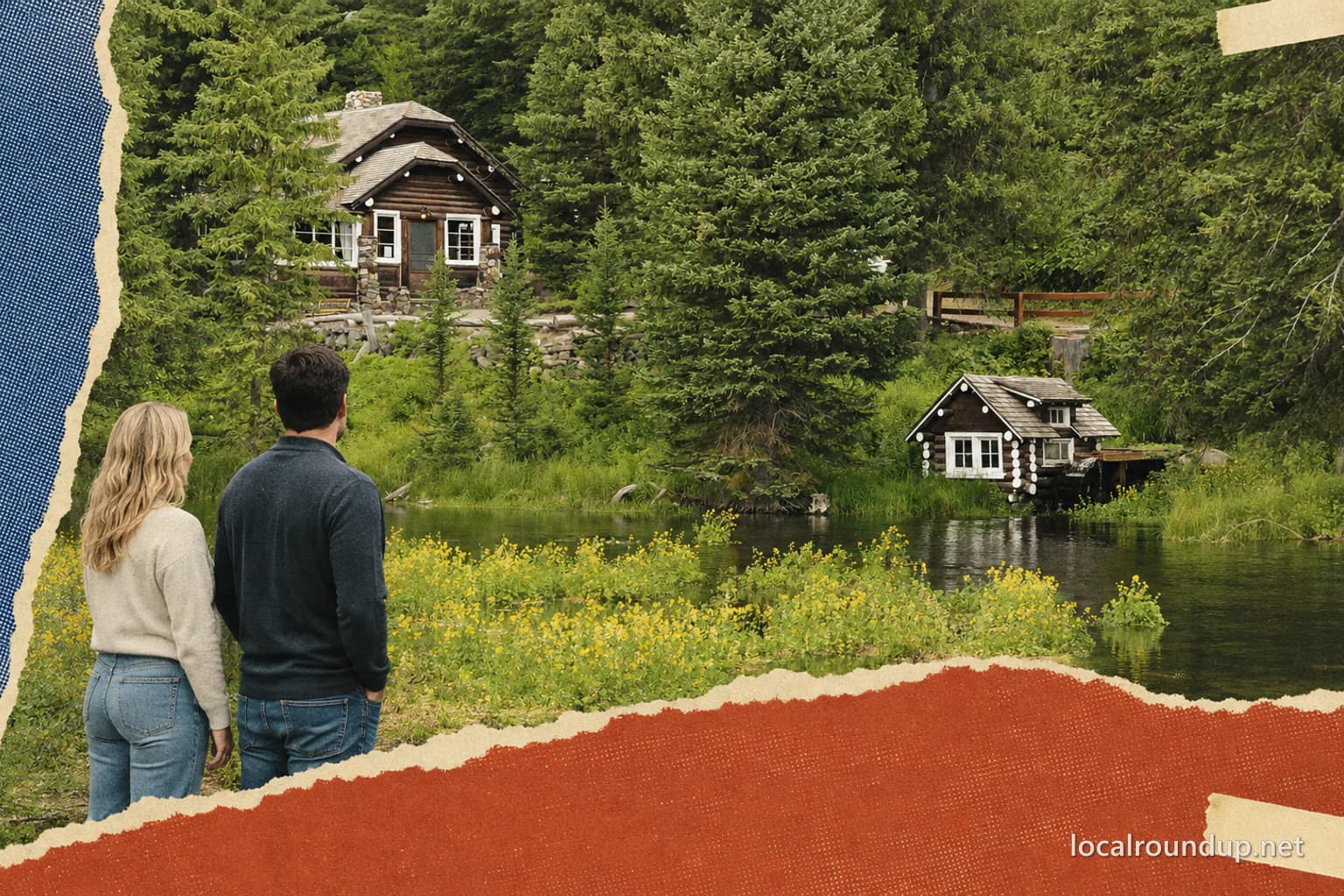
The simplest version is the spring and Johnny Sack Cabin. The cabin stands near Big Springs and is reached by a short paved path. Its hand-built woodwork and furniture are the reason to look inside, but interior access is seasonal and depends on current staffing. The surrounding spring remains the main destination when the building is closed.
Plan the cabin as seasonal access
Johnny Sack began building the cabin in the early 1930s on Forest Service land. The structure's bark-on wood details, furniture, and compact proportions distinguish it from a generic log house. Idaho's National Register documentation supports its architectural significance and original setting.
Current operating information is harder to pin down. A local Island Park visitor source lists summer hours and donation-based entry, while federal material confirms the cabin's visitor role without a current daily schedule. Treat the visitor source as a lead, not a guarantee. Call or check locally before promising that the interior will be open.
If the cabin is closed, the stop can still work as a walk around Big Springs. Do not feed fish or wildlife unless the current land manager explicitly permits it. Older promotional pages encourage feeding trout, but modern wildlife practice and site rules may differ. The draft does not recommend it.
Do not confuse the group campground with casual parking
Big Springs Group Area is a reservable Forest Service campground intended for groups. Recreation.gov lists one accessible group site with room for up to 40 people, picnic facilities, tent pads, vault toilets, drinking water, trash collection, and optional electrical service. That inventory describes the campground, not every parking area around the spring.
Reserve the group site only when the party actually needs a shared overnight base. Day visitors should follow local signs and use designated public parking. The nearby community of Mack's Inn has private services, but availability changes. Bring what the group needs rather than depending on a last-minute rental or store stop.
A float requires its own logistics
The Big Springs National Recreation Water Trail runs about 4.5 miles to Mack's Inn. Recreation.gov describes it as a slow trip that can take around three hours by tube or canoe. That estimate depends on water, craft, stops, and the group. A float needs a launch plan, legal flotation devices, cold-water judgment, weather awareness, and a shuttle or second vehicle at the takeout.
Walking to the cabin does not commit anyone to the river. Families with small children, limited time, or no shuttle should choose the land visit. Paddlers should verify current access and local outfitter operations independently.
Respect wildlife and a high-elevation climate
The campground sits near 6,300 feet. Weather can change quickly, nights can be cold, and snow limits winter access. The area supports bears, moose, elk, and other wildlife. Keep distance, secure food, and never crowd an animal for a photograph.
Big Springs is not a place to improvise a wildlife encounter. Stay on the developed route, supervise children near water, and keep the group together. Bring layers even on a warm Island Park afternoon.
Pick one clean version
For an hour, walk to the cabin area, study the craftsmanship if the interior is open, and spend time at the spring. For an overnight gathering, reserve the group site and read every facility notice. For a float, solve the shuttle before launching.
Trying to combine all three can turn an easy stop into a day of moving vehicles and watching the clock. Big Springs works best when the group knows whether it came for history, camping, or the river.
Fishing requires separate attention. The Recreation.gov campground description praises the Henrys Fork fishery, but rules vary by reach and season. Carry an Idaho fishing license when required and consult Idaho Fish and Game regulations before casting. Do not infer that fish visible at the spring may be targeted there. The historic stop, campground, and legal fishing water should remain separate in the plan.
Check the details
Dates and rules can change. These are the organizer and venue pages used for the practical details in this guide.
- Recreation.gov
`campground capacity, facilities, elevation, water trail, distance, approximate float time, wildlife`: Recreation.gov, Big Springs Group Area, https://www.recreation.gov/camping/campgrounds/234576. Confidence: high. Contradiction: float duration is descriptive, not guaranteed.
- Idaho State Historical Society
`historic significance, construction, architecture`: Idaho State Historical Society, Johnny Sack Cabin National Register record, https://history.idaho.gov/wp-content/uploads/2018/09/Sack_Johnny_Cabin_79000788.pdf. Confidence: high for history. Contradiction: no current visitor schedule.
- U.S. Forest Service
`cabin visitor role`: U.S. Forest Service, Dovetails and Broadaxes appendix, https://www.fs.usda.gov/t-d/pubs/pdfpubs/pdf15232802/Part12-Appendix_E-Pages-259-278.pdf. Confidence: high for agency role and architecture. Contradiction: not an operations page.
- Island Park Reservations
`seasonal hours lead and path description`: Island Park Reservations, Johnny Sack Cabin, https://islandparkidaho.com/history/johnny-sack-cabin. Confidence: medium because it is a local commercial visitor source. Contradiction: schedule lacks a dated season label, so same-day confirmation is mandatory.
- Hero image: Peggy Hamlen, published by the U.S. Forest Service
Hero collage adapted from a public-domain U.S. Forest Service photograph by Peggy Hamlen; cropped, recomposed, and combined with generated editorial elements.