
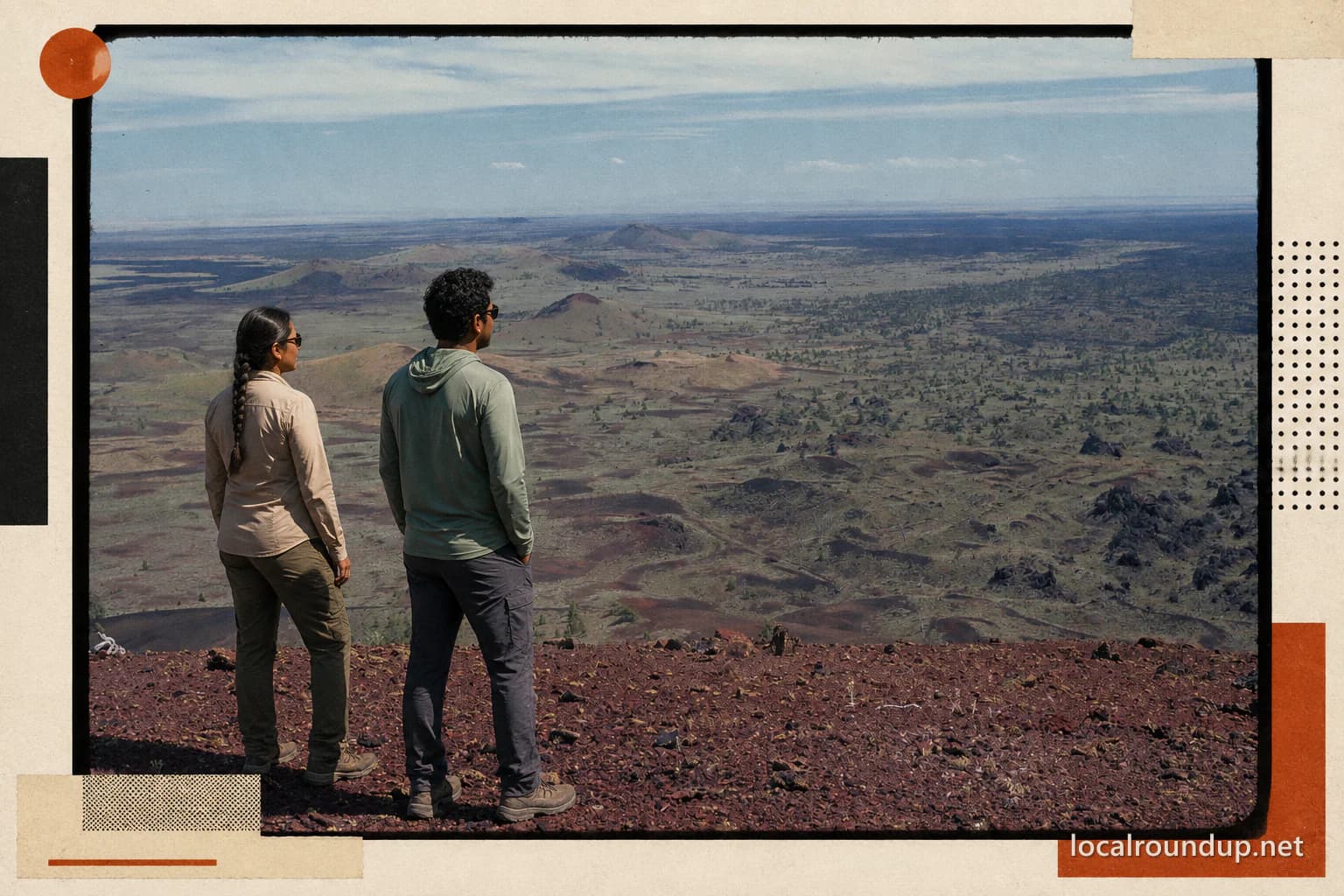
Choose caves or the scenic loop before leaving Carey
Craters of the Moon is about 24 miles northeast of Carey on U.S. 20/26/93, according to the National Park Service. It can be a straightforward Wood River day trip, but the plan changes sharply by season. The Loop Road usually opens to vehicles from mid-April into late November as conditions allow. Cave entry needs a free in-person permit during visitor-center hours.
A visitor who wants caves must reach the visitor center while permits are issued and bring only equipment that satisfies the park's white-nose-syndrome rules. A visitor who prefers viewpoints and short walks can build a good trip without entering a cave.
Put the visitor center first for caves
Permits are required for Indian Tunnel and Dewdrop Cave, the caves identified as open by the park at review time. All adults in the group must be present. Clothing or gear previously used in another cave or underground space cannot enter, even after washing. Read the current questions before packing.
Caves are undeveloped beyond their entrances. NPS warns about loose sharp rock, uneven and slippery surfaces, lingering ice, poor light, and low ceilings. Bring the equipment the current park guidance requires. If anyone lacks mobility, lighting, footwear, or confidence, use surface trails instead.
Use the loop for a flexible visit
The park's developed Loop Road is seven miles, while its FAQ describes the scenic circuit as nine miles round trip from the visitor center and estimates about 30 minutes without substantial stops. Most visitors spend two to four hours because short trails and overlooks add time. Pick two or three stops rather than attempting every trail.
The Loop Road closes seasonally for snow. During some shoulder periods it may open to walking or biking before vehicles. Current conditions control. Do not drive around a gate or treat an old trip report as proof of access.
Families who skip caves still need to compare trail surfaces. A paved overlook, a short cinder path, and a climb on broken lava demand different footwear and balance. Use the current accessibility page and trail descriptions rather than assuming every stop along a paved road is paved beyond the parking area.
Select the first suitable stop before entering the loop when a wheelchair, stroller, cane, or limited stamina shapes the day. Keep the visitor center as the fallback and ask staff which current surface best fits the group. A paved road to a parking area does not establish a step-free route to every overlook.
Carry water, offline information, and a return plan
The park says drinking water is available only at the visitor center. Fill bottles before starting the loop. Download the NPS app and park content because cellular service is very limited.
Vault toilets may be available at developed locations, but current conditions control. Do not use the campground as a picnic area when park guidance directs day visitors elsewhere. Choose a named picnic location from the current map and keep a food plan that still works if a facility is closed.
Lava is sharp, shade is limited, and summer surfaces can be hot. Wear sturdy shoes, carry sun protection and layers, and stay on allowed routes. Never collect rock, plants, bones, or artifacts. Check current pet rules before leaving Carey, especially in hot weather when an animal cannot safely remain in a vehicle.
Service animals follow different rules from pets, but sharp rock, heat, and cave terrain still matter. Read the current accessibility and animal guidance rather than assuming that permission removes the physical hazard. If the animal or handler cannot use the selected route safely, substitute a surface stop.
Check the NPS weather, smoke, and current-conditions pages plus Idaho 511. Lightning, heat, smoke, ice, and wind can turn a short trail into the wrong plan. Leave enough fuel and daylight for the return and carry food.
Run the decision sequence again on arrival: current road, permit availability, approved equipment, water, weather, and return time. If one cave requirement fails, do not spend the remaining daylight trying to solve it in the parking lot. Move to the prepared surface itinerary.
A useful first day is the visitor center, one lava-landscape walk, and either a cave or another surface stop. Caves are optional. If the permit, road, equipment, or weather does not work, the exposed lava field and short trails still explain why the monument exists.
Check the details
Dates and rules can change. These are the organizer and venue pages used for the practical details in this guide.
- Craters hours and seasons
Carey distance, seasonal Loop Road, visitor-center hours, and amenities
- Craters permits and reservations
In-person cave permits
- Craters cave permitting
White-nose-syndrome gear restrictions
- Craters current conditions
Current roads, caves, and closures
- Craters FAQ
Water, road season, visit duration, and hazards
- NPS Craters hero photograph
Exact-location public-domain federal photograph; modified with a generated two-adult cast, crop, paper, halftone, color treatment, and watermark
- National Park Service copyright notice
Federal public-domain context for NPS-created material