
Plan the visit
Camas National Wildlife Refuge can be a worthwhile pause off Interstate 15, but only if the plan begins with current water conditions. The refuge has warned that groundwater shortages and low snowpack may leave most or all wetlands dry. That can sharply reduce bird and wildlife viewing. A long species checklist copied from a normal year would mislead visitors.
The better question is how much time you have and whether a quiet drive through high-desert habitat still sounds useful when the ponds are sparse. If the answer is yes, Camas offers a straightforward auto route, a short trail, broad mountain views, and enough space to slow down. If the trip depends on seeing waterfowl, read the refuge alert on the morning of departure.
Pick the loop by available time
The U.S. Fish and Wildlife Service describes two useful versions of the auto tour. A short loop of about 3.5 miles can fit a 15-minute stop. A longer loop of about seven miles is the better choice for an hour because it reaches more ponds and habitat. Interpretive signs explain the landscape along the way.
Those time estimates are starting points, not promises. Wildlife observation rewards slow travel, and road conditions can change after rain or during winter. Use the kiosk near refuge headquarters for the current map. If a road is signed closed or looks unsuitable, turn around rather than driving around a barrier or onto habitat.
The 1.8-mile birding trail begins behind the headquarters parking area near the vault restrooms. The gravel route is rated easy and remains open year-round, but the refuge does not maintain it in winter. That makes it a reasonable add-on in dry weather, not a guaranteed all-season walk.
Time the visit for animal activity
Refuge staff recommend early morning or late evening in summer because wildlife tends to be more active then. The public area opens one-half hour before sunrise and closes one-half hour after sunset. Those hours give photographers useful light without turning the refuge into a nighttime destination.
Stay on the existing road system. Off-road travel is not permitted, and visitors may not remove natural objects, including shed antlers. Drones disturb wildlife and are generally prohibited on national wildlife refuges. Dogs should remain under control and must not become a reason to leave the permitted route.
Dry conditions change the visit but do not erase it. The refuge still sits among views of the Tetons, Centennials, Beaverheads, Lemhis, and Lost River Range. Raptors, mammals, and high-desert birds may use the area even when wetland viewing is poor. The honest plan is to observe what is present, not chase a promised sighting.
Bring what Hamer does not provide
There are no general traveler services in Hamer. The refuge identifies Roberts, about 20 miles south, and Dubois, about 17 miles north, as the nearest fuel options. Food, lodging, and other services are also limited compared with Idaho Falls or Rexburg. Fill the tank first, bring water and food, and download the map before leaving the interstate.
The headquarters office has weekday hours, but staff may be working in the field even during the posted window. Do not build the visit around finding an employee at the desk. Brochures are normally available at the parking area, and the auto route remains the main visitor experience.
Use Camas as a deliberate stop
Camas works best for patient visitors, birders willing to accept uncertainty, and travelers who want a quiet break between larger destinations. It is a poor choice for anyone expecting a staffed nature center, guaranteed water, a playground, or nearby dining.
Choose the short loop when the refuge is a travel break. Choose the long loop and birding trail when current conditions are favorable and the group can spend a quiet hour or two. Check the dry-conditions notice first. That one step matters more than any old list of birds.
Photographers should bring a longer lens rather than approaching wildlife. Turnouts and shoulders must remain usable by other drivers, refuge staff, and emergency vehicles. If another car is already stopped, pass slowly or choose the next safe pullout. Quiet behavior improves the visit and reduces pressure on animals that are already coping with limited water.
Check the details
Dates and rules can change. These are the organizer and venue pages used for the practical details in this guide.
- U.S. Fish and Wildlife Service
`current habitat condition, refuge scale, landscape, visitor fit`: U.S. Fish and Wildlife Service, Camas National Wildlife Refuge, https://www.fws.gov/refuge/camas. Support: approximately 11,000 acres, public access, mountain views, popular activities, and prominent dry-conditions warning. Confidence: high. Contradiction: normal habitat descriptions elsewhere do not override the active drought notice.
- U.S. Fish and Wildlife Service
`hours, routes, trail, services, directions`: U.S. Fish and Wildlife Service, Visit Us, https://www.fws.gov/refuge/camas/visit-us. Support: half-hour-before-sunrise opening, auto-tour lengths, 1.8-mile gravel trail, winter maintenance limit, Hamer service warning, and directions. Confidence: high. Contradiction: office hours do not guarantee staff presence, which the source states.
- U.S. Fish and Wildlife Service
`rules`: U.S. Fish and Wildlife Service, Rules and Policies, https://www.fws.gov/refuge/camas/visit-us/rules-policies. Support: road-only travel, protected objects, designated parking, camping and fire limits. Confidence: high. Contradiction: hunting access has separate rules and is outside this general visit guide.
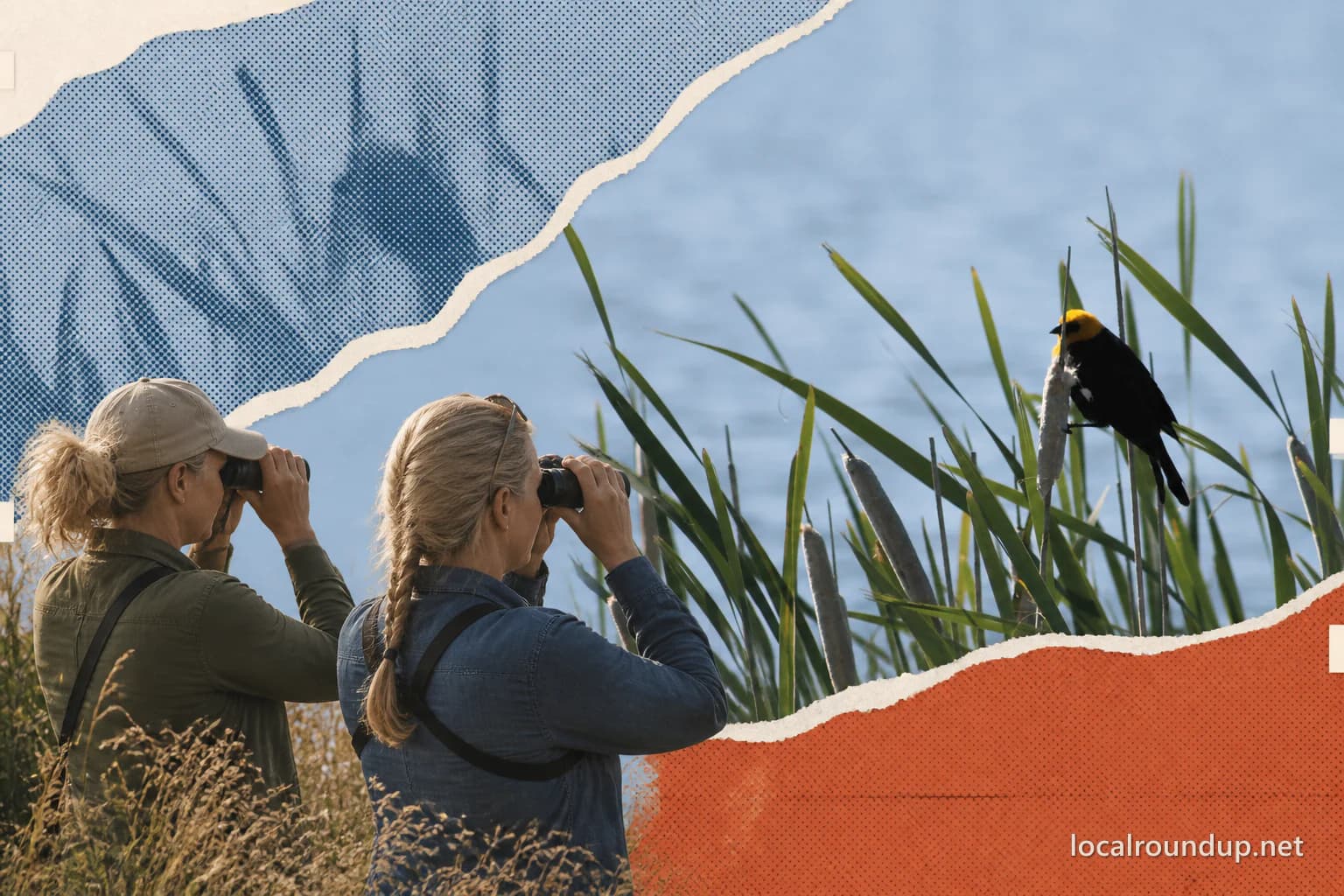
- Hero image: Brent Lawrence, U.S. Fish and Wildlife Service Pacific Region
Hero collage adapted from a public-domain U.S. Fish and Wildlife Service photograph; cropped, recomposed, and combined with generated editorial elements.