
Understand what the park name means
Nez Perce National Historical Park is 38 places across Idaho, Montana, Oregon, and Washington. The National Park Service administers only some of them. A search for the park does not lead to a single entrance road, and a federal site name does not guarantee a visitor center, restroom, staffed desk, or identical hours.
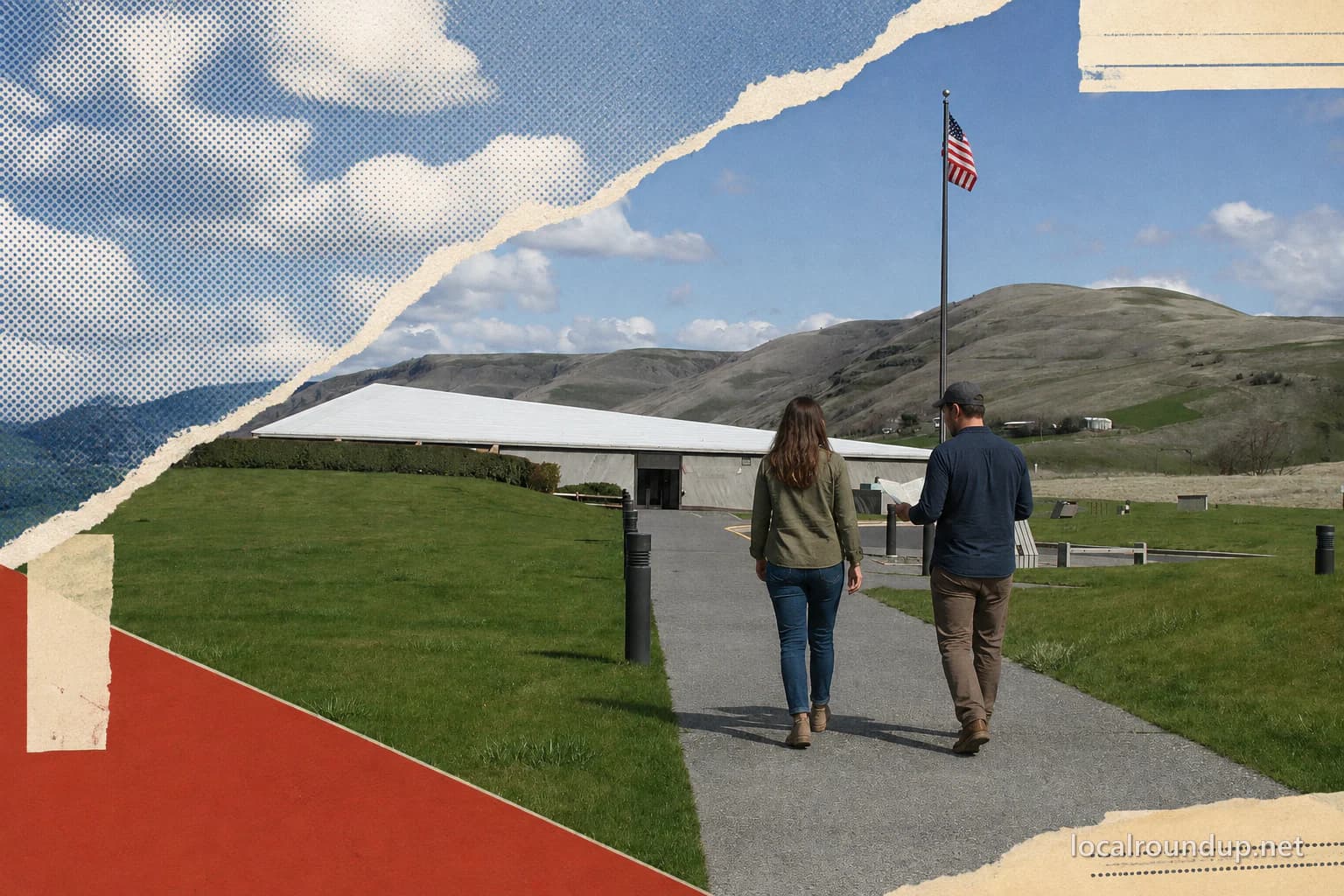
For a first Idaho visit, start with Spalding, about ten miles east of Lewiston on U.S. 95. It has the main visitor center, museum, film, park store, historic grounds, picnic facilities, restrooms, water, and trails. There is no entry fee. Check the live hours and alerts before departure.
Use Spalding for orientation
The visitor center introduces the Nez Perce story through exhibits and the film Of One Heart. The grounds include Watson's Store, church, agency buildings, mission remnants, cemetery, and archaeological traces. This is a place of long Nimiipuu residence and continuing history, not merely a stop about missionaries or westward expansion.
Allow time for the museum before choosing an outdoor trail. The Old Townsite Trail is about one mile and crosses a largely open area below the visitor center. Heat and limited shade can change the sensible route. Use the NPS trail map and stay out of archaeological features.
Choose one additional Idaho site
The NPS Idaho-sites page lists Spalding, Fort Lapwai, the Northern Idaho Indian Agency, Canoe Camp, Heart of the Monster, Weippe Prairie, White Bird Battlefield, and other places. They are scattered across substantial driving distances and have different ownership or service levels. Pick one whose story the group wants to understand.
White Bird Battlefield sits far south of Spalding, and the NPS guide places the main visitor center about seventy miles north. That is not a casual add-on after a museum visit. Canoe Camp or Heart of the Monster may fit a Clearwater corridor plan, but each needs its own directions and current alerts.
Let NPS describe access and conduct
Federally administered park sites are generally open sunrise to sunset under the current superintendent's compendium, while visitor-center hours are posted separately. Follow site signs, closures, and property boundaries. Some listed places are viewed from roads or have limited facilities.
Use the NPS place record for parking, restrooms, water, pets, and accessible features. An amenity at Spalding does not transfer to White Bird or Weippe Prairie. Ask the park when a facility determines whether someone can participate.
Keep the history specific and attributed
Use NPS and Nez Perce Tribe interpretation for the site's names, events, and meaning. Avoid reducing the Nimiipuu to a past-tense attraction. The Spalding site saw continuous generations of Nez Perce life before and through the mission and agency periods.
Do not collect objects, enter closed structures, leave markers, or stage activities on cultural features. Photography and picnicking should follow posted rules and respect ceremonies, visitors, and the purpose of the place.
Build a realistic day
Check alerts, Spalding hours, the Idaho-sites directory, directions, weather, and the selected site's amenities. Download maps where available because coverage can vary. Keep the visitor center plus one additional place as the default.
A smaller itinerary leaves time to understand why each place belongs to one park. Driving past five signs is not the same as visiting five sites. Start with interpretation, choose a story, and let distance and current access set the limit.
Prepare for open, lightly serviced sites
Several Idaho sites are outdoors with little shade and few services. Carry water, sun protection, layers, and enough fuel for the chosen loop. Check wildfire smoke, heat, and road conditions. A sunrise-to-sunset opening does not mean a ranger or staffed building will be present.
At battlefields and prairie sites, the ground itself carries the story. Stay on designated paths, keep voices and activities appropriate to the setting, and supervise children near roads and uneven ground. If weather makes a walk unsuitable, use the NPS digital material and return another day rather than rushing through a place that deserves attention.
Check the details
Dates and rules can change. These are the organizer and venue pages used for the practical details in this guide.
- NPS: Nez Perce NHP basic information
38-site structure, four states, Spalding location, no entry fee, visitor-center orientation, and current planning links
- NPS: Idaho park sites
Idaho site list, directions, ownership and facility distinctions
- NPS: Spalding
Spalding amenities, museum, film, grounds, historic resources, accessibility labels, and park store
- NPS: Spalding trail system
Old Townsite Trail distance, route setting, and trail choices
- NPS superintendent's compendium
Federally administered sites and general sunrise-to-sunset visiting hours