
Plan the visit
The Idaho Museum of Natural History is on the Idaho State University campus in Pocatello. The useful planning fact is that a museum collection and a museum floor are not the same thing. The institution cares for large anthropology, earth-science, and life-science collections, but a visitor sees the exhibitions installed during that season. Check the current exhibit list before promising a child a particular fossil, animal, or cultural object.
That changing program makes the museum better suited to a focused indoor visit than an all-day itinerary. Give it a clear purpose. One family may want Idaho fossils and ancient environments. Another visitor may care about Indigenous history or current scientific research. Start with the live exhibition page and choose one question to follow through the galleries.
Check the campus details first
The museum occupies the lower level of the ISU building commonly identified in its visitor information. Campus parking rules, construction, entrances, and hours can change during the academic year and university breaks. Use the museum's own Visit page and the university parking information on the day of arrival. Do not rely on a general campus pin alone.
Confirm admission before the trip. The museum has offered free admission in recent public information, but programs, group arrangements, or special events may work differently. A free general visit does not imply that every class or ticketed activity is free.
Accessibility also begins before the gallery. A visitor who needs step-free access should confirm the correct building entrance and parking route with museum staff. Once inside, ask where to begin rather than assuming the most visible doorway leads to every gallery.
Let the current exhibitions set the pace
Natural-history museums rotate objects because collections are used for research, conservation, teaching, and temporary displays. The Idaho museum describes work in anthropology, earth sciences, and life sciences. That breadth does not mean every subject gets equal floor space during every visit.
Read the exhibition labels slowly enough to connect an object to Idaho. The museum's strongest local value is not simply seeing a fossil or specimen. It is learning where it came from, how scientists interpret it, and what it says about the region. Parents can ask children to pick one object, draw it, and explain what evidence the label provides.
Visitors who want a quick loop should resist reading every panel. Choose one gallery in depth, scan the rest, and return to the object that raised the best question. A longer visit works when the active exhibitions cover several distinct subjects and the group still has attention left.
Separate a museum visit from a campus tour
The museum sits inside a working university. Campus dining, other buildings, and public programs follow their own calendars. If the goal includes an ISU tour, bookstore visit, or sporting event, verify each part separately. Museum staff cannot guarantee access to unrelated university spaces.
Pocatello weather makes the museum a useful backup when an outdoor plan becomes unpleasant. It should not be described as an emergency substitute without checking hours. University holidays, exhibit work, or special closures can remove that option.
Build a simple family plan
Before entering, give each child one job: find an Idaho animal, identify a rock or fossil clue, or choose a label to read aloud. Bring a notebook instead of expecting hands-on access to collection objects. Follow photography and food rules posted in the gallery.
Afterward, use the visit to choose the next local stop. A geology question can point toward the region's lava, caves, or mountain landscapes. A biology exhibit can lead to Zoo Idaho or a refuge. The museum becomes more useful when it helps a family see the surrounding region differently.
Plan for a compact visit, verify the day's exhibit and campus information, and leave with one answered question. That is a better measure than the number of display cases covered.
Groups need more lead time than individual visitors. Teachers, homeschool groups, and clubs should ask about capacity, guided programming, and bus arrival before choosing a date. A self-guided family should still check the event calendar. A school program or gallery change can make an otherwise normal weekday busier or close part of the floor.
Check the details
Dates and rules can change. These are the organizer and venue pages used for the practical details in this guide.
- Idaho State University
`location, hours, admission, visitor instructions, current exhibits`: Idaho State University, Idaho Museum of Natural History visitor pages, https://www.isu.edu/imnh/. Support: museum identity, campus setting, public visitor information, and current exhibition routing. Confidence: high, mutable. Contradiction: search results and subpages may cache older hours, so current landing page controls.
- Idaho State University
`collection scope and institutional role`: Idaho State University, IMNH Collections and Research, https://www.isu.edu/imnh/imnh-collections-and-research/. Support: anthropology, earth-science, and life-science collections and research role. Confidence: high. Contradiction: collection size does not equal objects on display, which the draft states.
- Idaho State University
`campus parking`: Idaho State University, Parking and Transportation, https://www.isu.edu/parking/. Support: campus permit and visitor-parking information. Confidence: high, mutable. Contradiction: none recorded.
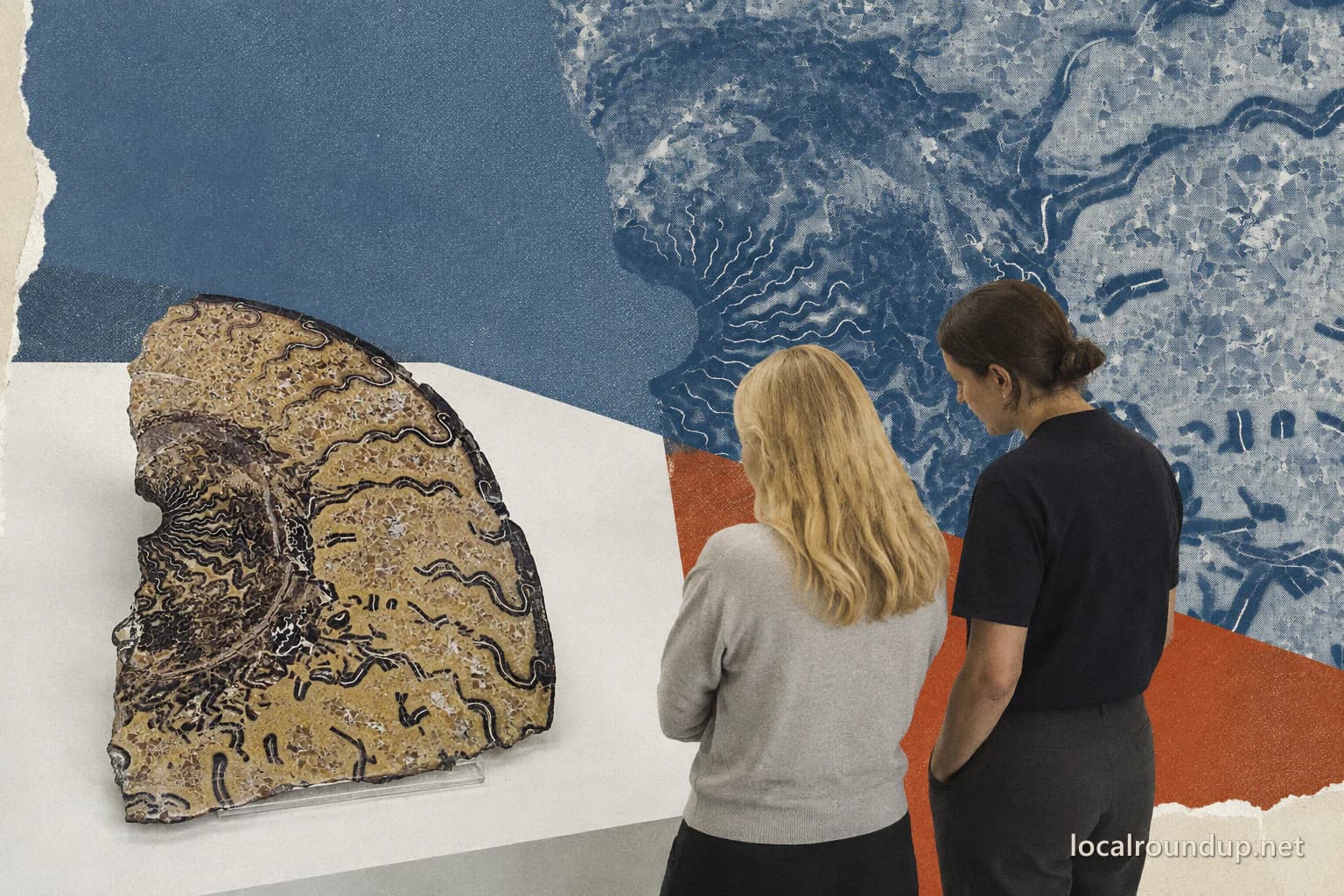
- Hero image: James St. John
Hero collage adapted from James St. John's ammonite photograph under CC BY 2.0; cropped, recomposed, and combined with generated editorial elements.
- Hero image license: CC BY 2.0
License terms for the credited source photograph; the published collage is a modified adaptation.