
Plan the visit
Blackfoot Reservoir is a large, remote water destination northeast of Soda Springs. Its campground supports boating, fishing, picnicking, swimming, hunting, and overnight stays, but this is not a staffed city beach. A successful trip starts with fuel, water, weather, and wildlife planning before the pavement runs out.
The management split matters. Bureau of Indian Affairs manages the reservoir, while the Bureau of Land Management manages Blackfoot Reservoir Campground and several campgrounds along the Blackfoot River. Follow signs and rules for the exact parcel you use. A rule on one agency page should not be assumed to apply everywhere around the shoreline.
Decide whether the campground is the destination
The BLM campground is the defensible public base for a first visit. Agency material identifies developed camping and access for fishing, boating, swimming, and picnicking. Use the current BLM site page for fees, season, fire restrictions, and any closure notice before driving.
Do not plan around finding groceries, potable water, cell service, fuel, or rental equipment at the reservoir. Carry drinking water, food, sun protection, warm layers, a first-aid kit, and enough fuel for the return. Download the route and emergency information before leaving service.
For an overnight, bring a setup that can handle wind and rapid temperature changes. Confirm whether fires are allowed that day; a fire ring is not permission during a restriction. Pack out every item if no trash service is available.
Before committing to a campsite, match the current BLM notice to Blackfoot Reservoir Campground rather than another campground along the river. The shared place name does not make their facilities or restrictions identical.
Treat water access as variable
Blackfoot is an irrigation reservoir. Its shoreline and usable launch conditions change with water level. An old photograph, map, or review cannot establish today's ramp or swimming conditions. Check the current agency notice and contact the field office when launching is essential.
Boaters need all required Idaho equipment and a plan for wind. The reservoir's size can make a calm launch area misleading. Wear life jackets, watch the forecast, and turn back before whitecaps build. Clean, drain, and dry watercraft to reduce invasive-species risk.
Swimming is listed among the site's activities, but that does not imply a lifeguard, groomed beach, or tested municipal pool. Inspect the shoreline, keep children within immediate reach, and avoid areas used by boats. If safe entry, water quality, or weather is uncertain, make the day a picnic and wildlife-viewing stop instead.
Fish with current rules in hand
Agency descriptions note rainbow trout, cutthroat trout, and carp. Species descriptions do not replace a current Idaho fishing license or regulations. Check Idaho Fish and Game rules for the reservoir, legal methods, limits, and any special notices.
Anglers should also plan for wind and a broad, exposed shoreline. Bring a backup activity rather than forcing a boat launch or long bank session in unsafe conditions.
Give wildlife room
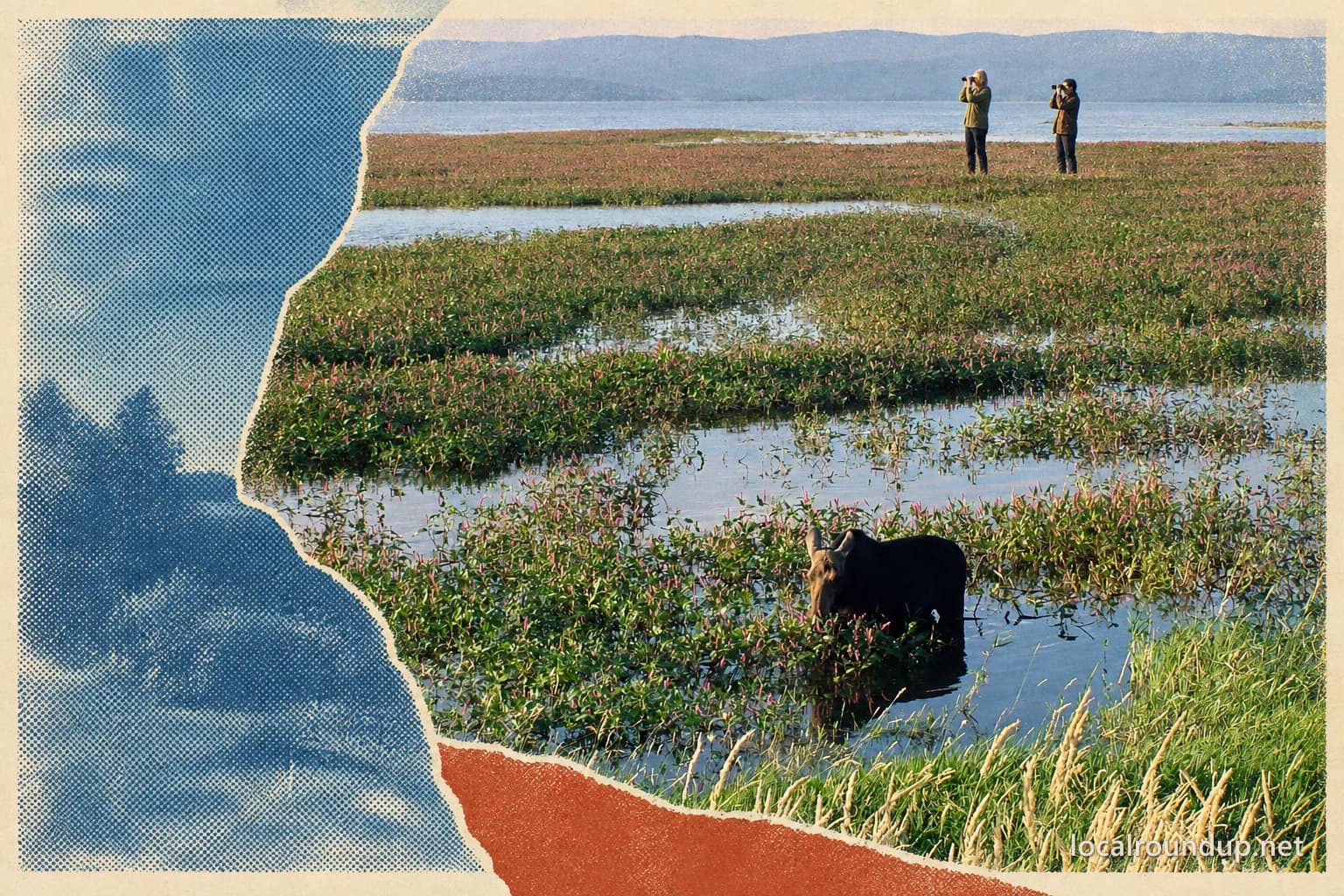
The reservoir's islands and wetlands support pelicans, cormorants, gulls, waterfowl, and shorebirds. BLM photography also documents moose using the wetland edge. Observe from a distance. Never approach a moose, place a child between an animal and open cover, or block the animal's exit.
Use binoculars instead of moving closer. Keep food secured, dogs controlled under current rules, and voices low near nesting or resting birds. Islands may be sensitive habitat even when they look like convenient picnic stops.
Build a go/no-go checklist
Go when the route is open, the weather is stable, the group has enough water and fuel, and current notices support the planned activity. Reconsider when fire restrictions eliminate the overnight plan, wind makes boating doubtful, or a low reservoir leaves launch conditions unclear.
For a first visit, keep the plan modest: use the established campground, spend several hours near shore, and return before dark. An overnight or boat-heavy trip makes more sense after the group understands the road and the site's actual services.
Blackfoot Reservoir offers space and fewer urban distractions precisely because it is remote. That tradeoff is the guide's central decision. Visitors who arrive self-contained can use the campground as a quiet base. Anyone expecting a concession stand, lifeguard, or quick replacement for forgotten gear should choose a more developed site.
Check the details
Dates and rules can change. These are the organizer and venue pages used for the practical details in this guide.
- Bureau of Land Management Idaho
`management split, reservoir scale, fish and bird context`: Bureau of Land Management Idaho, Blackfoot Reservoir asset description, https://commons.wikimedia.org/wiki/File:Blackfoot_Reservoir_(40808910071).jpg. Retrieved 2026-09-05. Confidence: high for the documented location and management description. Contradiction: the historical asset narrative is not used for current fees or operating notices.
- Idaho Department of Fish and Game
`current fishing regulations and licensing`: Idaho Department of Fish and Game, Fishing Rules, https://idfg.idaho.gov/fish/rules. Retrieved 2026-09-05. Confidence: high and mutable. Contradiction: current rulebook controls over promotional species lists.
- Bureau of Land Management Idaho
`campground identity, fee season, operating contact, activities and current site notices`: Bureau of Land Management, Blackfoot Reservoir Campground, https://www.blm.gov/node/101696. Retrieved 2026-09-05. Confidence: high and mutable. Contradiction: current posted notices control over historical descriptions.
- Recreation.gov
`current campground facilities, reservable and first-come sites, potable water, ramps, fees and limited-cell payment preparation`: Recreation.gov, Blackfoot Reservoir Campground, https://www.recreation.gov/camping/campgrounds/202063. Retrieved 2026-09-05. Confidence: high and mutable. Contradiction: live inventory and notices control for a specific visit date.
- Hero image: BLM Idaho
Hero collage adapted from a public-domain Bureau of Land Management photograph; cropped, recomposed, and combined with generated editorial elements.