
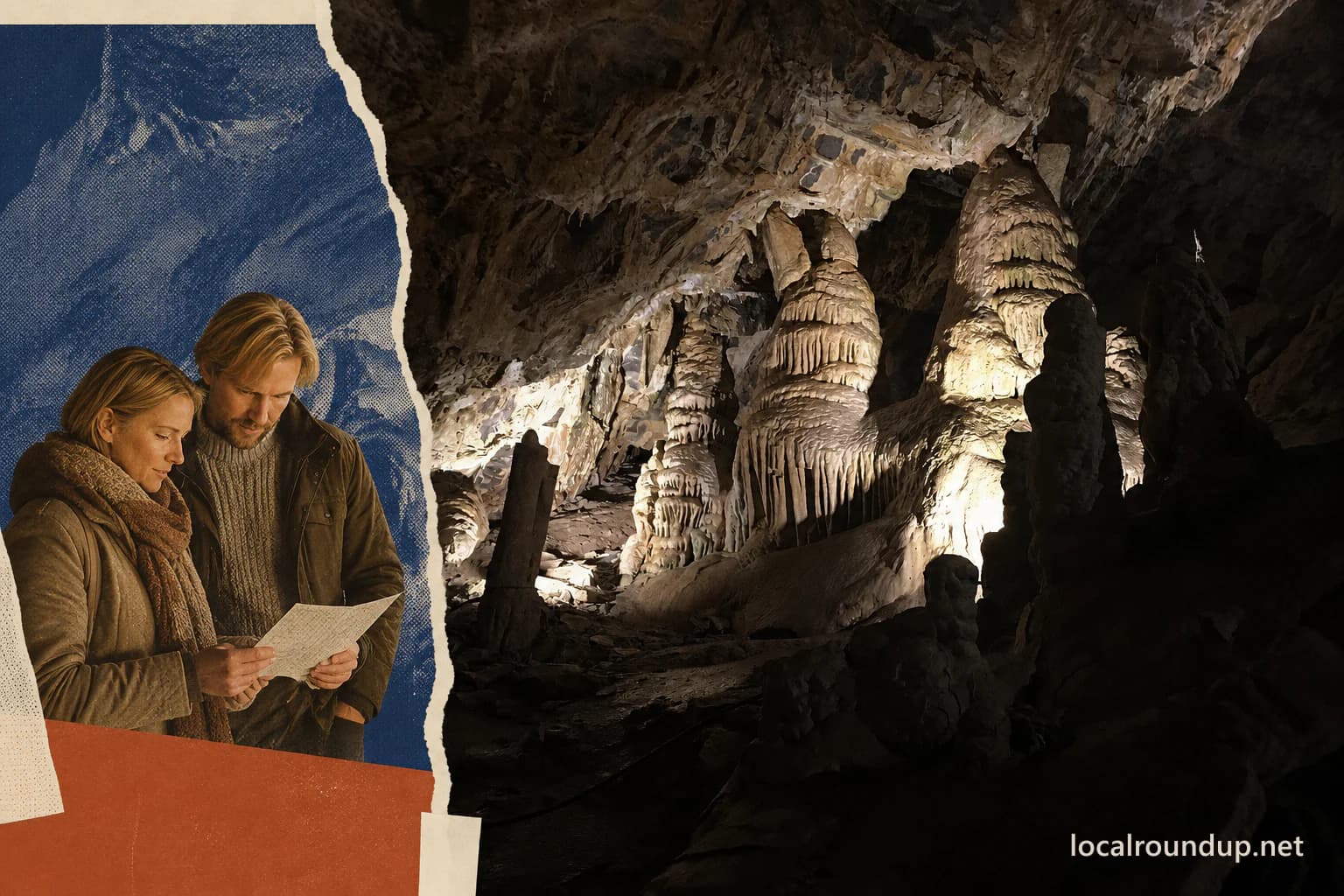
Plan the visit
Minnetonka Cave is a guided tour with 888 stairs in a cave that stays about 40 degrees. Those two facts should decide the trip before anyone buys a ticket. The formations are the reward, but the route requires repeated climbing at elevation and does not offer an easy shortcut once the group is inside.
The cave lies west of St. Charles near Bear Lake. The Forest Service directs drivers from U.S. 89 onto Minnetonka Cave Road for about eight miles to the lower parking and check-in area. Mountain-road conditions and seasonal operations matter. Confirm the current opening, tour schedule, and road status before leaving town.
Make an honest mobility decision
Count the stairs as 888, not as a vague warning that there are "a lot." The guided route goes down and back up, with pauses while the guide explains formations. A person who struggles with sustained stairs, has a heart or breathing concern, or cannot manage the return climb should talk with the operator before booking.
Parents should judge each child by stair endurance and ability to stay with a group in a cold, enclosed setting. Carrying a tired child back up is not a sound plan. The tour schedule can also place several groups in the cave at once, requiring patient passing in constrained areas.
The cave is not an accessible substitute for a surface nature walk. Ask the operator about current accommodations and alternative experiences. Do not infer accessibility from the parking area or visitor facilities.
Treat 40 degrees as winter clothing weather
The cave remains around 40 degrees year-round. Bring a jacket and footwear suitable for stairs and damp surfaces. Summer heat in the parking lot does not change the underground temperature. Leave enough time to change layers before the tour begins.
The Forest Service says potable water is not available at the site. Carry drinking water for before and after the tour, but follow the operator's rules about what may enter the cave. Use the restroom before check-in if current facility information is uncertain.
Protect bats by changing what you bring
White-nose syndrome is a disease that harms bats and can travel between caves on clothing or gear. The Forest Service says visitors must not bring items that have been in another cave or mine. That includes footwear, hats, purses, cameras, backpacks, jewelry, and phones.
Take that rule literally. Wearing the same hiking shoes used in a different cave can disqualify the plan. Set aside clean clothing and equipment that have not entered another cave or mine. Read the current Recreation.gov instructions because screening procedures can change.
This is not a minor etiquette request. It protects a living cave ecosystem. If the group cannot comply, choose another outing.
Reserve, then recheck
The Forest Service directs visitors to Recreation.gov for tickets. Reservation availability, fees, age bands, tour intervals, and cancellation rules belong to the live ticket page. Save the confirmation and arrive at the required check-in time. A reservation does not protect against a road closure, fire restriction, or safety cancellation.
Cell service can be unreliable in mountain country. Download directions and the ticket before the drive. Fuel in town and bring food for the return rather than assuming services at the cave.
Keep the rest of the day light
Do not pair the tour with another rigid reservation unless there is ample buffer. The mountain drive, check-in, guided tour, and recovery time can occupy much of a half day. A relaxed Bear Lake stop or Montpelier meal is easier to adjust than another timed program.
Minnetonka Cave is a good choice for a group that can climb, dress for cold, follow disease-prevention rules, and arrive on schedule. Resolve those four points first. The cave itself will provide enough interest without cramming the calendar.
Photography should remain secondary to safe movement. The Forest Service lists cameras among items that cannot enter if they have been inside another cave or mine. Even clean equipment must follow the tour operator's current rules. If a photograph would slow the group on stairs or require touching a formation, skip it. Cave formations grow over long periods and oils from hands can damage them.
Check the details
Dates and rules can change. These are the organizer and venue pages used for the practical details in this guide.
- U.S. Forest Service
`stairs, temperature, tour format, white-nose rules, directions, water, contact`: U.S. Forest Service, Minnetonka Cave, https://www.fs.usda.gov/r04/caribou-targhee/recreation/minnetonka-cave. Confidence: high. Contradiction: operational-hours accordion contains stale 2024 details despite a 2026 page update, so no dated schedule is carried into the draft.
- Recreation.gov
`live tickets, fees, age categories, check-in and cancellation rules`: Recreation.gov, Minnetonka Cave Tickets, https://www.recreation.gov/ticket/facility/10087702. Confidence: high but mutable. Contradiction: live inventory changes; must recheck before publication.
- Idaho Transportation Department
`regional road conditions`: Idaho Transportation Department, 511 Idaho, https://511.idaho.gov/. Confidence: high for current state-road conditions. Contradiction: does not cover every Forest Service road condition.
- Hero image: Isabel Jones
Hero collage adapted from Isabel Jones' photograph under CC BY-SA 4.0; cropped, recomposed, and combined with generated editorial elements. The adaptation is distributed under CC BY-SA 4.0.
- Hero image license: CC BY-SA 4.0
License terms for the credited source photograph. The modified collage adaptation is distributed under the same CC BY-SA 4.0 license.